全國熱線服務:
新聞資訊 Top label
- Motion Shaft Technology: Essential Components for Precision Linear Motion Systems
- How Electromagnetic Flow Meters Revolutionize Industrial Flow Measurement
- Sealed Dampers: Essential Components for Maintaining Airflow Integrity in Industrial Systems
- The Evolution and Applications of Rolling Cylinders in Modern Industrial Manufacturing
- Precision Forming Technology: Understanding the PMF400 Machine in Modern Manufacturing
- The Complete Guide to CNC Mechanical Parts: Precision Engineering for Modern Manufacturing
What problems may occur during the production process of precision boring and rolling pipes?
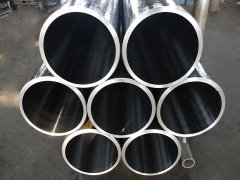
Precision boring and rolling tubes are widely used in industry, but problems often occur during the production process. In order to produce good products, we should pay attention to some problems that easily occur in production, reduce defective products, and save costs. The following problems often occur during the production process of precision boring and rolling pipes:
Horizontal scratches on the pipe surface: Horizontal scratches on the pipe surface are usually due to non-sliding or edge wear of the roll opening, and the steel pipe is fed back when the groove or roll does not leave the pipe.
Longitudinal scratches on the tube surface: Usually the roller hole is too small and cannot rotate, the roller is dragged on the tube surface, the slope of the slide section is not enough, the selected roller is too small or the tube embryo is too large.
Nozzle cracking: radial tension exceedsRolled tubestrength; there are microcracks at the end of the pipe, and the cracks expand during the rolling process; the roll opening is too large to produce transverse tension, and cracks occur when the tensile stress exceeds the tensile strength; the thickness of the pipe wall is seriously uneven, and large deformation leads to cracking.
The tube blank is cut head-on: generally due to improper adjustment of the swing rod, which generates a large axial force; when rolling thin-walled tubes, the outer diameter of the mandrel is too large; the tube end surface is uneven and the pressure is too great. The core rod is not too difficult to stick to the metal or mandrel so it is out of sync with the tube blank.
Crack in the middle: Generally, the tube blank is not transported during the rolling process and is rolled in situ. The two core rods are not tightly connected and the connection is uneven, forming a hollow rolling process. The original crack in the middle of the tube expands in the middle.
Pipe shape: One is due to the short size of the mandrel, the difference between the two mandrels before and after hollow rolling and the upper and lower raceway holes; the other is caused by the overturning of the mandrel, the excessive size of the rolling groove and the gap. The inner diameter of the roll, mandrel and tube blank are too large, and the diameter reduction amount is too large.
Geometric deviation: usually due to the wear of the deformation tool, the reduction and size adjustment of the mandrel, and the amount of springback after rolling is not taken into account. The deviation in the diameter of the rolled pipe is mainly caused by the problem of the finishing part of the hole pattern.
In the production process of precision boring and rolling pipes, common problems are often the above problems. In work production, if the above phenomena are solved in time, waste in the production process can be reduced as much as possible and production efficiency can be improved.